Special Briefing - War, Inflation, and the Impact on the Economy and State and Local Budgets

The Iran war and resulting surge in oil and gas prices are raising risks for the U.S of stagflation or even worse. Our panels of expert discussed how these clouds may impact the nation’s economy and, especially, the finances of state and local governments just as many are putting finishing touches on their budgets for fiscal 2027.
While state tax revenues continued to rise in 2025, they are barely keeping up with inflation, and rising expenditures are leaving many states with billions of dollars in budgetary gaps that need to be closed. Their delicate fiscal balancing act may prove more difficult if the current climate grows more unsettled as 2026, a year that may see a shift in control of Congress as well 36 gubernatorial elections.
Speakers included Natalie Cohen, President and Founder, National Municipal Research; Julia Coronado, President and Founder, MacroPolicy Perspectives LLC; Kim Norton, Mayor, Rochester, MN; Brian Sigritz, Director of State Fiscal Studies, National Association of State Budget Officers (NASBO); and Mark Zandi, Chief Economist, Moody's Analytics.
Moderated by William Glasgall, Volcker Alliance Public Finance Adviser and Penn IUR Fellow, and Susan Wachter, Co-Director of the Penn Institute for Urban Research and Wharton Professor of Real Estate and Professor of Finance, this briefing was the sixty-eight in a series of sixty-minute online conversations featuring experts from the national research networks of the Volcker Alliance and Penn IUR, along with other leading academics, economists, and federal, state, and local leaders.
Special Briefings are made possible by funding from The Travelers Institute, the Volcker Alliance, and members of the Penn IUR Advisory Board. Recordings of the entire Special Briefings series are available on the Volcker Alliance or Penn IUR websites.
Be sure to subscribe to the Special Briefing podcast, available on Apple Podcasts, Spotify, Google Podcasts, TuneIn, iHeart Radio and more.
Subscribe to the Volcker Alliance newsletter and Penn IUR newsletter for advance notice of new Special Briefings.
-----------------------------------------------------------------------------------------------------------------------------------------------------
EVENT RECAP
Zandi opened with a cautious assessment of the macroeconomic outlook, emphasizing both resilience and fragility: “The economy's growing. It's moving forward, but it's a very fragile growth.” He said that GDP is expanding “somewhere around 2 to 2.5%,” but below its full potential: “it's not enough to generate enough jobs to maintain even stable unemployment. Unemployment is steadily moving higher, and we aren't creating any jobs.” He highlighted the central role of energy markets: “Every $10 per barrel increase in the price of oil raises inflation in the subsequent year by 20 basis points and reduces growth by 10-15 basis points.” He cautioned, “to get a recession, we’re not that far away. Oil would have to rise to about 125 bucks a barrel… That would be enough to push this fragile economy into an economic downturn.” At the same time, he pointed to AI as a key growth driver: “all of the investment, the data centers…is adding significantly to economic growth.” Conversely, “there's also the ongoing concern about the pace at which AI is adopted and the impact that has on productivity,” he said. “It's an economy that's okay…but it's a very, very tentative, fragile economy,” Zandi concluded.
Coronado reinforced the theme of resilience under strain, highlighting structural constraints: “We don't have any labor supply anymore. Labor supply is effectively zero,” which limits future growth potential. Factoring in geopolitical shocks, she said, “we are going to experience the shock from higher energy prices…that will take a bite out of growth,” estimating that “our forecast is for GDP to grow about 1.5% in the U.S. this year.” She also emphasized global spillovers, warning, “the hit overseas is much greater…and that has some spillover into the US.” Coronado underscored the policy volatility facing states, describing “a massive policy whipsaw” and noting that public-sector hiring, which “was a real source of significant jobs growth,” has slowed sharply. “When we look at the structure of hiring, as it's all health care, and beyond health care, there’s very little in the way of sectors really adding jobs,” she said. “It feels like we are resting on a very narrow pillar of a lot of AI enthusiasm holding the market up.”
Norton provided a ground-level perspective from Rochester, Minnesota, highlighting how inflation and supply constraints are reshaping local budgets. “We are seeing significant cost pressures for 2026 and 2027,” she said, adding that “the traditional 3% annual inflation assumption no longer reflects the current conditions.” She detailed rising costs: “Since 2020, construction input prices have increased more than 43%,” while “tariffs are adding another 5% to 8% to material costs,” she said. Labor shortages further complicate delivery: “Fewer bidders reduce competition, increasing prices,” and in one case, “we received exactly one bid, and it exceeded the amount that had been planned.” Despite these challenges, she emphasized continued investment: “We are not slowing down,” even as “projects are more expensive, more complex, and they require longer to deliver.”
Sigritz highlighted the fiscal condition of states, marked by a shift from surplus-driven expansion to tighter budgeting. “While we're not seeing significant budget shortfalls right now, what we're seeing is that budget conditionings are tightening across states,” he said. “2026 is marking the fourth consecutive year of slow growth in general fund revenue,” with “0.3% on a median basis.” At the same time, “a lot of surplus funds have now expired,” forcing states to adjust. He pointed to rising spending pressures, including high medical inflation, education costs, and affordability concerns, noting that “one of the top priorities is the need to address affordability.” Despite these challenges, he emphasized resilience: “State fiscal conditions are stable,” supported by “rainy day funds remain near record levels,” and “debt levels are low.” Wachter asked whether this cautionary approach reflects a long-term shift to more responsible state budgeting. “What we saw after COVID-19, when states were initially assuming that revenues would sharply decline, was record growth along with the federal COVID-19 aid,” said Sigritz. “States recognized that double-digit revenue growth that we saw in that ‘21 and ‘22 time period wasn't going to continue. It wasn't sustainable. So, they took measures to [bolster their rainy day funds].”
Cohen shared insights from the municipal bond market, highlighting strong issuance trends. “There has been record bond market volume…2024 had $514 billion, 2025, $580 billion,” with continued momentum into 2026. She noted that “much of it is new money for projects,” reflecting infrastructure demand. At the same time, she emphasized structural challenges, including “labor shortages creating bottlenecks” and competition from private-sector AI investment, with “$700 billion in capital spending for 2026” announced by major tech firms. Cohen also highlighted demographic and economic shifts, including migration patterns and affordability challenges. Of particular concern is “student loan overhang, currently at $1.8 trillion,” she said. “The Federal Reserve recently stated that for every $1,000 of student debt, there's a 1.8% decrease in home ownership.”
Wachter framed the open discussion segment of the Special Briefing by asking the panel about the economic impact of moratoriums on new data centers: “What's the risk that the growth driver falls flat due to moratoriums?” Panelists emphasized that while some states are considering restrictions, the broader outlook remains intact. Zandi responded, “The economics here are so compelling that I think that they'll win the day… We're seeing the peak of the political opposition to it right now, and it will abate going forward.” Cohen said “there are some states like Maine, for example, looking at a moratorium,” but underscored continued private-sector momentum.
Wachter then turned to infrastructure investment under current economic conditions, asking how elevated costs and interest rates are shaping decisions. Norton responded: “We are at a time of rapid growth. We have to accommodate that. So we are not slowing down,” while acknowledging that “other cities are pulling back because of the budgetary impacts.” Sigritz added that “there remains a lot of pent-up demand for infrastructure projects… I think you'll continue to see infrastructure spending,” though potentially at a slower pace and with increased reliance on borrowing. Coronado supported this view from a macro perspective, noting that investment growth “has slowed…but that's a pace that we saw before the pandemic,” emphasizing that “the needs are still there…but just much more slowly.”
The conversation then shifted to inequality and the risk of a K-shaped economy. Coronado said that “it was really the high-income households driving the spending,” while lower-income households were under greater strain. She warned that reliance on wealth effects raises sustainability concerns, particularly given concentrated stock market gains. Zandi reinforced this point: “Folks in the top 20% of the income distribution account for 60% of the personal outlays.” This dynamic “poses a bunch of challenges,” she said, including vulnerability to market corrections and broader societal implications.
Panelists agreed that while the U.S. economy continues to grow, it faces significant crosscurrents from geopolitical risk, inflation, labor constraints, and structural inequality. State and local governments, while fiscally stable, must navigate tightening budgets, rising costs, and shifting federal policies, even as infrastructure needs and investment demands remain high.
-----------------------------------------------------------------------------------------------------------------------------------------------------

Natalie Cohen is the President and founder of National Municipal Research, a consulting and research company focused on U.S. state and local government finance. She blogs about these topics at The Public Purse.
A seasoned analyst, published writer and speaker, Natalie is often quoted in the Bond Buyer, Barron’s, Forbes, Route Fifty, and Bloomberg. She started her career at New York City OMB, worked at a rating agency, several insurers and is known for risk analysis and work on municipal bond defaults. She most recently spent eight years building and branding sell-side municipal research at Wells Fargo Securities. She is a frequent speaker at industry events and has given training sessions to various trade associations. She was awarded the “Lifetime Achievement” award by Smith’s Research and Gradings and the “Women Trailblazers” award from the Bond Buyer.
She has an MPA from New York University's Wagner School of Public Service and a BA from Hampshire College in Amherst, Massachusetts. She has been a member of the Government Accounting Standards Advisory Council, a former Board member and co-chair of the education committee of the National Federation of Municipal Analysts. She served two terms on the Government Finance Officers Association standing budget committee and is currently on the Committee on Retirement Benefits Administration. She is on the Board of Directors of Build America Mutual, and currently chairs the Audit Committee. She recently joined the Milken Institute Public Finance Council.

Julia Coronado is the President and Founder of MacroPolicy Perspectives LLC. She founded MPP because she believes independent research can provide the most objective and relevant analysis to inform decision making in an uncertain world. Julia is a Clinical Associate Professor of Finance at the McCombs School of Business at the University of Texas at Austin. She has more than a decade of experience as a financial market economist including serving as Chief Economist for Graham Capital Management and BNP Paribas, and as a Senior Economist at Barclays Capital. After receiving her Ph.D. in Economics from the University of Texas at Austin, Julia worked for the Federal Reserve Board of Governors in Washington D.C. for eight years where she regularly briefed the Board and contributed to the FOMC forecasts.
Julia has published a number of scholarly articles on issues related to pension finances and market valuations, social security, retirement saving adequacy and behavior, the frontier of private and public data collection, digital currency and monetary policy. Julia has represented the US at OECD meetings on financial market issues and has testified before the US Congress on Social Security reform and Central Bank Digital Currencies. She is a member of the Economic Advisory Panel of the Federal Reserve Bank of New York and the Economic Studies Council at the Brookings Institution and is former President of the National Association of Business Economists. Julia is also on the Board of Directors of Robert Half International and Dynex Capital and serves on the Advisory Boards of the Bureau of Economic Analysis, the Pension Research Council at the Wharton School and the Cleveland Fed’s Center for Inflation Research. Julia is a regular commentator in financial media, including CNBC, Bloomberg, Marketplace, and the Wall Street Journal.

Kim Norton became the first woman Mayor of Rochester, Minnesota when she was elected in November of 2018 and took office on January 1, 2019. She was recently re-elected as Mayor for another four-year term. Mayor Kim Norton earned a Bush Fellowship, which allowed her to complete a master’s degree at the University of Minnesota’s Humphrey School of Public Affairs focused on leadership and energy policy. This work allowed her to investigate communities recognized for their sustainability and livability.
Prior to her fellowship, Mayor Norton served in the Minnesota House of Representatives, representing District 25B, consisting mostly of the northern portion of Rochester in Olmsted County in the southeastern part of the state. During her 10 years as a legislator, she introduced many pieces of significant legislation including the Destination Medical Center (DMC) economic development project aimed at positioning Rochester as a premier location for health care. Before serving on the state legislature, Mayor Norton served 8 years, including one as board chair of the Rochester Public School Board.
In addition to the Mayor’s solid and long history of public service and leadership, she has a record of asking tough questions, seeking out and listening to people with differing opinions, and working with the community to build bridges toward finding smart, fair solutions.
Mayor Norton recently completed an Executive Certificate In Public Policy at Harvard University’s Kennedy School and has attended the Rockwood Leadership Institute. She continues to serve on many local and state nonprofit boards and has a number of leadership roles in state and national municipal government organizations (NLC, USCM, and MIP) Kim is a member of the Greater Rochester Rotary.
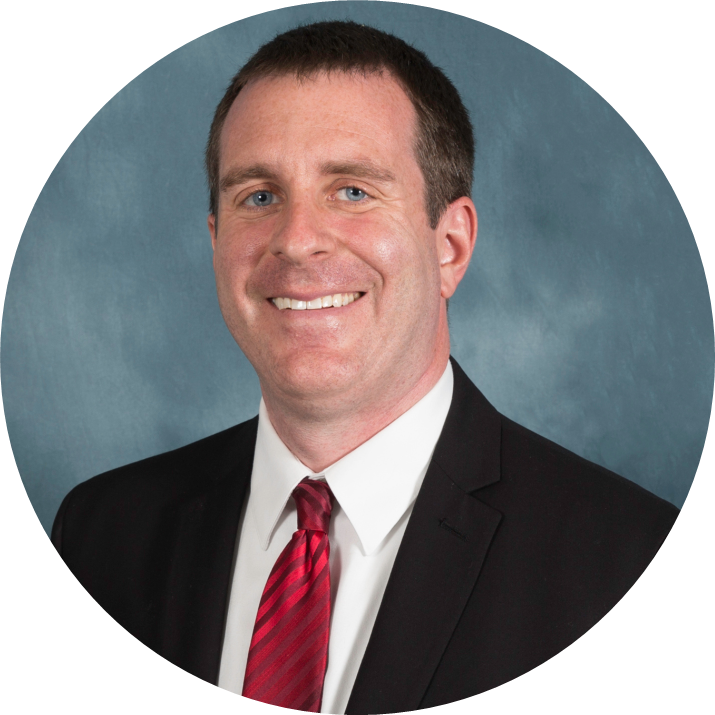
Brian Sigritz is the Director of State Fiscal Studies for the National Association of State Budget Officers (NASBO) in Washington, D.C. Within NASBO, his responsibilities include tracking and analyzing tax and revenue trends, as well as handling NASBO activities related to transportation, capital budgeting, emergency management, housing, and pensions. He also monitors the fiscal health of the states and edits and produces the State Expenditure Report annually.
Prior to coming to NASBO, Sigritz worked as a legislative aide in the Ohio Senate and the Ohio House of Representatives, where he served as the caucus staff representative on the Human Services and Aging Committee. He has also served as the legislative liaison to the Mayor of Dayton, Ohio. In addition, Sigritz has authored articles on state fiscal conditions, has been quoted in a number of publications, and has appeared on several television programs.
Sigritz graduated with a Bachelor of Arts from St. Bonaventure University, and received his Master of Public Administration degree from George Washington University. He also studied sociology and history while attending Oxford University.
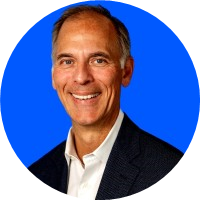
Mark Zandi is the chief economist of Moody’s, where he directs economic research. Moody’s is a leading provider of economic research, data and analytical tools. Zandi was a co-founder of Economy.com, which Moody’s purchased in 2005. He is on the board of directors of MGIC, the nation’s largest private mortgage insurance company; is the lead director of Policy Map, a data visualization company; and is on the board of the Coleridge Institute, a non-profit that facilitates the use of data across federal, state and local governments. An influential source of economic analysis for businesses, journalists and the public, Zandi frequently testifies before Congress. He is the author of Paying the Price: Ending the Great Recession and Beginning a New American Century, which assesses the monetary and fiscal policy response to the Great Recession. His other book, Financial Shock: A 360º Look at the Subprime Mortgage Implosion, and How to Avoid the Next Financial Crisis, has been described by the New York Times as the “clearest guide” to the financial crisis.
Zandi earned his BS from the Wharton School at the University of Pennsylvania and his PhD from the University of Pennsylvania, both in economics.


