Special Briefing - Transportation Opportunities & Challenges in the New Federalism

This Special Briefing was centered on the implications for America's transportation network in the developing realignment of trillions of dollars in federal fiscal support for states and localities. This realignment presents great opportunities as well as vexing challenges for transportation planners and developers. Moves to accelerate project delivery, including handing responsibility for environmental reviews of highway construction to states, may help cut costs. At the same time, Administration moves to repeal the entire federal climate regulatory framework under the Clean Air Act may complicate efforts to improve the ability of the nation's transportation systems to withstand the stresses of increasingly severe weather events. A bitterly divided Congress, meanwhile, faces a September 30 deadline to reauthorize $1.2 trillion in federal funding for highways, transit, safety, and railroads.
Speakers included Eryn Hurley, Chief Government Affairs Officer, National Association of Counties; Baye Larsen, Vice President and Senior Credit Officer, Moody's; Robert Poole, Director of Transportation Policy and Searle Freedom Trust Transportation Fellow, Reason Foundation; Naomi Renek, former Senior Advisor on Federal Policy, Metropolitan Transportation Authority; and Lauren Schapker, Vice President of Legislative Affairs, American Road and Transportation Builders Association (ARTBA).
Moderated by William Glasgall, Volcker Alliance Public Finance Adviser and Penn IUR Fellow, and Susan Wachter, Co-Director of the Penn Institute for Urban Research and Wharton Professor of Real Estate and Professor of Finance, this briefing was the sixty-seventh in a series of sixty-minute online conversations featuring experts from the national research networks of the Volcker Alliance and Penn IUR, along with other leading academics, economists, and federal, state, and local leaders.
Special Briefings are made possible by funding from The Travelers Institute, the Volcker Alliance, and members of the Penn IUR Advisory Board. Recordings of the entire Special Briefings series are available on the Volcker Alliance or Penn IUR websites.
Be sure to subscribe to the Special Briefing podcast, available on Apple Podcasts, Spotify, Google Podcasts, TuneIn, iHeart Radio and more.
Subscribe to the Volcker Alliance newsletter and Penn IUR newsletter for advance notice of new Special Briefings.
-----------------------------------------------------------------------------------------------------------------------------------------------------
EVENT RECAP
Renek opened with a broad framing of how “new federalism” is reshaping transportation governance: “The discussion of federalism and new federalism is focused on which level of government makes decisions related to public goods,” she said. “Traditionally, there was a common understanding that improved mobility is a public good. Anything that goes into transportation, operational safety, infrastructure, reduced pollution… Federal funding has been provided based on this very basic concept that these things are good for society.” However, she highlighted growing tensions between federal and local roles, pointing to congestion pricing in New York as “an innovative, locally driven approach to providing a traditional public good” that nonetheless drew “tremendous federal involvement and interest despite adherence to existing federal laws.” Renek underscored shifting priorities, observing that “federal funding is being diverted from bike/ped, EV, and other clean transportation projects toward the administration's more road-centric priorities,” while stressing the continued importance of land use policy and affordability initiatives at the local level: “Policies and funding programs that encourage transit, active transportation and denser land use are impactful to affordability.” This “revamped version of federalism,” she concluded, “is now a factor in decision-making regarding the policies and projects that states and localities prioritize.”
Larsen delivered a financial and credit market perspective, noting that “our outlooks for most of our infrastructure sectors in 2026 are all stable,” reflecting resilience despite uncertainty. “Even in the midst of turmoil and the changing federal, state, local funding relationships, our transportation issuers do have tremendous flexibility and independence that stabilizes their credit profiles.” Still, she warned that issuers will face difficult decisions as funding shifts, particularly if federal priorities change. She highlighted risks tied to funding volatility: “A rapid change in access to federal funds has caught folks by surprise, and that less predictable funding freeze is typically harder to respond to than the more gradual transitions.” Looking ahead to reauthorization of the federal surface transportation law, which expires on September 30, Larsen stressed both timing and scale challenges: “History suggests that there will be multiple short-term extensions… This probably won't be quick.” She also noted a structural funding gap: “If the federal government is going to consider a reduction in highway and transit grants, they'd need to cut those by about 40% and 72%, respectively.” She said that without innovation, the likely outcomes include “more borrowing by states and local governments, or risks arise in deferred maintenance.”
Hurley highlighted the central but often underappreciated role of counties, which are “the single largest owner and operator of local infrastructure in the country.” She detailed the scale of county responsibilities: “Counties actually own and maintain 44% of the nation's roads…[and] 38% of the nation's bridges,” while investing $60 billion in transportation annually. Nevertheless, she pointed to structural inequities in federal funding flows: “Counties and other local governments received, on average, 14% of federal formula transportation dollars… The counties that sometimes have the greatest infrastructure needs…have the least institutional support to access federal dollars,” she said, emphasizing disparities for rural areas. Hurley also highlighted fiscal constraints: “There are actually 42 states that impose property tax limitations on counties… Counties have a very limited ability to actually raise [their] own revenue.” He concluded by outlining reform priorities, including increasing local access to funding and addressing rural planning gaps to “provide the tools needed for rural counties to be on a level playing field.”
Schapker focused on industry performance and legislative outlook, emphasizing the scale of recent progress under federal investment: “There have been nearly 120,000 highway and transit projects in every US county that have received support from this law.” She noted measurable gains, including that “highway, bridge, and street contractor employment is up 41,000 since the Infrastructure Investment and Jobs Act (IIJA) was signed into law,” countering concerns about capacity constraints. Schapker also noted infrastructure improvements, such as “when the IIJA was signed into law, there were about 43,000 structurally deficient bridges. That number is down to 41,000.” Looking ahead, she stressed the importance of continuity: “We are laser-focused on finding a way to get another service transportation reauthorization bill done on time that continues this robust trajectory of investment.” While acknowledging political headwinds, she expressed cautious optimism: “The House and Senate are working in a real bipartisan way,” she said. “Any proposed transit cuts…are not going to make it across the finish line.”
Poole offered a more cautionary long-term perspective, arguing that structural funding challenges could force a fundamental shift in federal policy. “The Highway Trust Fund is on its last legs,” he warned. “Congress cannot continue indefinitely bailing out the highway trust fund with borrowed money.” He highlighted the looming fiscal constraint: “This will absolutely cease by 2032, which is when Social Security is expected to be declared insolvent.” Poole outlined the limited feasibility of traditional policy responses, with taxes and spending cuts both posing a challenge. Instead, he suggested an alternative: “We really should look at the alternative of devolution—devolve the revenue and spending authority to the states and localities.”
In the open discussion, panelists explored funding uncertainty, project delivery, and emerging trends. On public-private partnerships (P3s), Poole argued that “P3s would play a much bigger role if the federal government liberalized tolling,” suggesting tolling could become “a more reliable future revenue source than fuel taxes.” Larsen cautioned that P3s often do not solve funding gaps, noting they are “more of a project delivery opportunity rather than a funding opportunity.” Richards noted challenges for transit agencies, particularly for large capital projects and accessibility upgrades.
On emerging technologies, Renek said that autonomous vehicles “are still taking up road space—this doesn't help congestion.” Schapker pointed to ongoing federal debates around EV infrastructure and equity requirements, while also noting potential revenue solutions: “There will likely be another push for electric vehicles to pay an annual registration fee that goes into the Highway Trust Fund.” The panel also discussed workforce reductions and institutional capacity, with Schapker observing that staffing changes could create “an opportunity to embrace new technologies that might make some of these processes go more quickly.” In closing reflections, panelists highlighted their primary concerns, including Poole’s warning that highway tolls remain “unpopular and hard to implement;” Larsen’s concern that uncertainty could lead to “increases in deferred maintenance;” and Hurley’s emphasis on “what's really going to happen with the surface transportation package” amid competing federal priorities.
-----------------------------------------------------------------------------------------------------------------------------------------------------
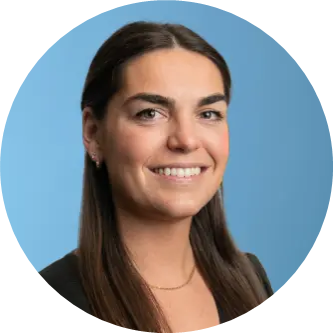
Eryn Hurley serves as NACo's Chief Government Affairs Officer, where she plays a key role in shaping and advancing the association’s federal policy priorities and development. Assisting in Legislative and Executive Branch outreach and experience in a broad range of domestic policy issues, Eryn works closely with county officials across the country to advocate for county interests on Capitol Hill and in the White House.
Her deep understanding of public policy, coupled with a commitment to ensuring that counties have a strong voice in federal legislation, has made her a vital part of NACo’s leadership team. Since March 2021, Eryn has oversaw the implementation of the American Rescue Plan Act’s (ARPA) State and Local Fiscal Recovery Fund (SLFRF) where she provided county leaders with information about eligible uses, reporting requirements and more.
Eryn also spearheads NACo’s Federal Fellowship Initiative, which focuses on the importance and structure of America's intergovernmental system, with a specific emphasis on the roles, responsibilities, operations and policy priorities of county governments across the country. As part of the initiative, NACo aims to educate members of Congress, Congressional staff and federal policy officials about the roles and responsibilities of counties across the country.
Eryn also staffs the National Association of County Intergovernmental Relations Officials (NACIRO) and serves as a liaison to the DC-based county lobbyist groups.
Prior to her current position, she staffed the Finance, Pensions and Intergovernmental Affairs (FPIGA) portfolio focused on policies related to fiscal management, municipal borrowing and elections along with the Human Services and Education (HSE) portfolio.

Baye Larsen is a Vice President/Senior Credit Officer for the States and High Profile Ratings Team covering credits for the states of New Jersey, Ohio, Oregon, New Hampshire, North Dakota, and Idaho, as well as the New York Metropolitan Transportation Authority and New Jersey Transit. Baye has contributed to several methodologies and authored the “Global
Mass Transit Methodology” and the methodology for “State Aid Intercept Programs and Financings: Pre and Post Default”. Prior to joining the State and High Profile Ratings Team, Baye worked for the U.S. Project and Infrastructure Finance Team, where she covered a diverse portfolio of utility and infrastructure issuers, and on the Eastern Local Government Ratings Team providing ratings for local governments and water and sewer utilities. Baye received her BA in government from Georgetown University and her Master in Public Administration from New York University.
Robert Poole is director of transportation policy and Searle Freedom Trust Transportation Fellow at Reason Foundation. He co-founded the Reason Foundation with Manny Klausner and Tibor Machan in 1978, and served as its president and CEO until the end of 2000. He was a member of the Bush-Cheney transition team in 2000. Over the years, he has advised multiple presidential administrations on transportation policy.
Poole is credited as the first person to use the term "privatization" to refer to the contracting out of public services and is the author of the first-ever book on privatization, Cutting Back City Hall, published by Universe Books in 1980. He is also editor of the books Instead of Regulation: Alternatives to Federal Regulatory Agencies (Lexington Books, 1981), Defending a Free Society (Lexington Books, 1984), and Unnatural Monopolies (Lexington Books, 1985). He also co-edited the book Free Minds & Free Markets: 25 Years of Reason (Pacific Research Institute, 1993).
Poole has written hundreds of articles, papers, and policy studies on privatization and transportation issues. His popular writings have appeared in national newspapers, including The New York Times, The Wall Street Journal, USA Today, Forbes, and numerous other publications. He has also been a guest on network television programs such as Good Morning America, NBC's Nightly News, ABC's World News Tonight, and the CBS Evening News. Poole writes a monthly column on transportation issues for Public Works Financing.
Poole earned his B.S. and M.S. in mechanical engineering at the Massachusetts Institute of Technology (MIT) and did graduate work in operations research at New York University.

Naomi Renek is the owner of Renek LLC, which provides senior-level advisory services to transit agencies, policymakers, and industry partners navigating complex policy, funding, and organizational challenges. Drawing on more than two decades of experience at the NY Metropolitan Transportation Authority (MTA), Naomi Renek brings first-hand insight into how federal policy, funding decisions, and organizational dynamics intersect, and how to advance initiatives when the path is uncertain.
Prior to Renek LLC, Naomi held several executive positions at the MTA, including Senior Advisor to MTA Chair & CEO, Chief of Staff at MTA NYC Transit, and Deputy Chief of Staff at MTA Construction & Development. She was MTA’s lead strategist on federal affairs and served on the American Public Transportation Association’s (APTA) Executive Committee, Board, and Legislative Steering Committee. Naomi began her transit career at NYC Transit planning long-term subway service changes, including the Second Avenue Subway. She previously worked in advertising.
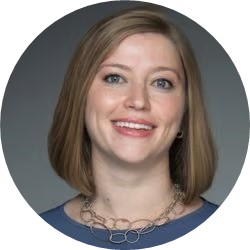
Lauren Schapker joined the American Road and Transportation Builders Association (ARTBA) in July 2019 as vice president of legislative affairs. She is one of ARTBA’s primary advocates on Capitol Hill and works with legislators and their staffs to advance transportation construction industry priorities.
Prior to joining ARTBA, Lauren worked at the Portland Cement Association (PCA) beginning in 2009. She led the organization’s transportation portfolio through the MAP-21 surface transportation law and oversaw PCA’s grassroots and political efforts
Lauren left PCA in 2014 to open the Washington, D.C., office of the National Ground Water Association (NGWA). For nearly five years, she directed both legislative and regulatory portfolios on a range of infrastructure matters, increasing NGWA’s profile with key stakeholders and national media.


