Up to Us Professional Pathways Internship Stipend Program Summer 2026 Reflections

Vinny Anderson, Colorado Policy Evaluation and Action Lab
"This summer, I worked with the Colorado Policy Evaluation and Action Lab as School District Outreach Staff. The Lab collects and analyzes data for the State and its departments, constituents, and relevant stakeholders to identify where policy interventions are needed the most. I worked on the Early Childhood Workforce Project, identifying causes of teacher pay parity across the state. Under the Public School Financial Transparency Act, public school districts must report, among other documents, Salary Schedules and Policies used to administer pay to employees. However, these schedules rarely fully capture how different types of educators are compensated. Often, teacher compensation for an entire district is on one schedule, depicted by a wide spectrum based on education and professional experience. My task was to explore Salary Schedules and Policies, Collective Bargaining Agreements, Job Descriptions, and job site postings to see whether Early Childhood Educators were explicitly captured in these documents and agreements and, moreover, whether they were eligible for the same pay and benefits as their peers.
Most districts distinguish certified educators (usually educated and licensed teachers, paid a salary dispersed over a set number of months of work) from classified educators (usually paraprofessionals and teaching support, paid hourly). However, it is often unclear whether certified educators in Early Childhood Education (ECE) require an ECE distinction on their teaching licenses, or whether their corresponding classified supports need the same accreditation to work with the same students. This gets even more complicated for Substitute Teachers, Guest Teachers, and Special Education Teachers, especially when these roles overlap. For instance, consider a Special Education ECE Paraprofessional: Does this role exist in the district? Does it require an ECE and Special Education accreditation? Are they on the same pay schedule as other paraprofessionals? Does the district pay ECE educators differently from Kindergarten educators? Are all of these roles eligible for the same benefits as their Elementary and Secondary equivalents? None of these questions had convenient answers, and that is where my work came in.
For every district in the state, I first glimpsed their Financial Transparency pages with a preliminary Gemini list. Then, I combed through the list and visited district sites to populate a spreadsheet mapping all publicly available information about each district's ECE roles. For missing information, I crafted individualized Colorado Open Records Act (CORA) requests to retrieve the remaining details. As a part of my work, I also called state offices to get a better picture of what different agencies did at a more fundamental level, and automated dataset compilation with Python to try to understand, for every district, where funding comes from, what it goes towards, and how many students it serves.
As a student studying Psychology and Data Science and Social Systems, my work with the Colorado Lab has been extremely fulfilling. I am fascinated by how data can be leveraged to reveal the consequences of fiscal policy initiatives on inter- and intra-personal development, and this opportunity showed me just how crucial that intersection is. This data reveals who is at the table when these fiscal policies are administered, which has significant consequences for educator attrition in ECE. Moreover, it provides crucial information for State stakeholders, who can use the data to better understand how fiscal policies can be implemented to ensure more equitable outcomes for educators and students alike. My work with the Colorado Lab has revealed just how consequential fiscal policy can be, both in its presence, and its absence; while there was a lot to be learned in what was publicly available, the often-over-generalized language made positions that fall outside of the norm more elusive, despite the critical role they play in child development. The Colorado Lab proved that what I have studied thus far is but a seed of what is to come, watered by deliberate investigation that prioritizes our constituents, our circumstances, and our humanity.
For future students pursuing similar opportunities: follow your boundless curiosity, wherever it takes you! I only heard about the Up to Us Professional Pathways Internship after stumbling across an application to the inaugural Up to Us Fiscal Leadership Lab two semesters prior. I was only offered the opportunity at the Colorado Lab because I reached out with a cold email, leading with my compassion and my aspirations. I was only able to expand databases and discover new records because I was willing to stretch my search criteria to its limits. No matter how ambitious your passion, it flows to where it is needed the most!
I am infinitely thankful to Up to Us and the Volcker Alliance for making this internship possible. It has changed my life, and cemented my future in fiscal policy, educational advocacy, and public service."
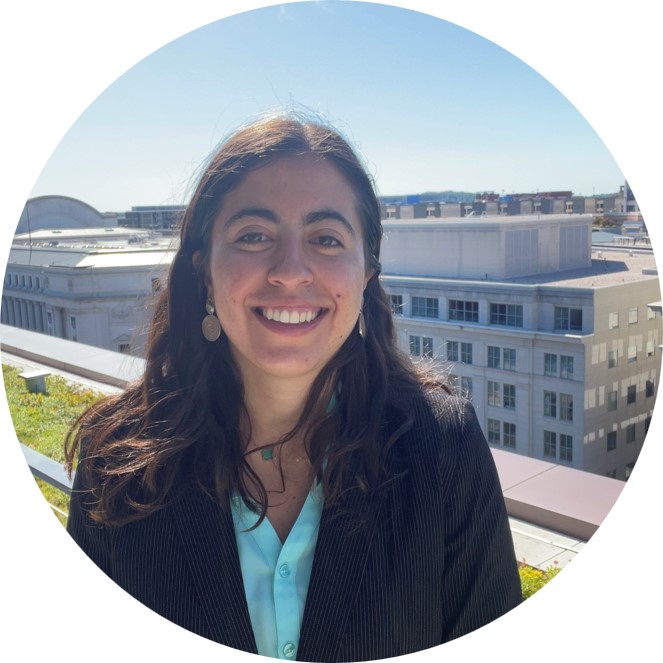
Alexia Del Vecchio, U.S. House of Representatives
"During my internship with Congresswoman Sylvia Garcia's Office in the U.S. House of Representatives, I had the opportunity to gain firsthand experience in the legislative process and the day-to-day responsibilities of a congressional office. As an intern, I contributed to meaningful policy work while developing valuable research, analytical, and communication skills. This experience strengthened my interest in public service and deepened my appreciation for the work that goes into creating and supporting legislation that impacts communities across the country.
One of my primary responsibilities was synthesizing more than 250 amendments to the National Defense Authorization Act (NDAA). This project required me to carefully analyze each amendment, identify its purpose, and summarize complex legislative language into concise, understandable briefs for the office. Completing this work taught me how important attention to detail is in the legislative process and how even small policy changes can have significant implications. I also learned how congressional staff evaluates proposed amendments to determine their potential impact and alignment with the Congresswoman's priorities.
In addition to legislative research, I prepared more than 15 recommendations for bill co-sponsorships and sign-on letters. This involved conducting policy research, reviewing the goals of proposed legislation, and analyzing whether the office should support various initiatives. Through this process, I gained a stronger understanding of how members of Congress collaborate to advance legislation and advocate for issues that matter to their constituents. I also realized that policymaking is built on extensive research, collaboration, and strategic decision-making rather than simply debating ideas on the House floor.”
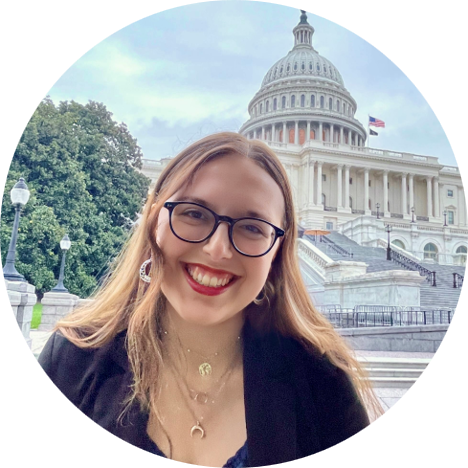
Rachel Ledoux, RepresentUs
"This summer, I served as a Democracy Renovation Fellow at RepresentUs, a nonpartisan nonprofit working to address political corruption and strengthen American democracy. My fellowship was organized through Democracy House and supported by the Up to Us Internship Stipend Award. The experience gave me the chance to bring together so many of the things I care about – public policy, civic engagement, and storytelling – while contributing to work that reaches people across the country.
At RepresentUs, I focused primarily on creating public-facing digital content about democracy reform, government ethics, and political corruption. During the internship, I produced two short-form videos, a social media thread, and four carousels and written posts. Each project involved much more than simply presenting information. I conducted current-events and historical research, wrote scripts and copy, filmed videos, gathered archival footage and other visuals, and edited content for publication. I also participated in weekly staff meetings, where I contributed ideas and got a behind-the-scenes look at how a national nonprofit develops its communications strategy.
One of my favorite projects was a short-form video I scripted, filmed, and edited that explored Senator John McCain’s campaign-finance-reform efforts. So far, it has received over 100,000 views across platforms and was our most successful post this summer. As someone still fairly early in my communications career, seeing that success was incredibly exciting. Watching something that I created reach so many people gave me greater confidence in my abilities and reminded me why I am so drawn to policy communications.
My research also introduced me to emerging questions about the relationship between private influence and public decision-making. I examined issues involving congressional stock trading, the connections between Donald Trump Jr. and 1789 Capital, and the approval of advanced artificial-intelligence chip exports to the United Arab Emirates. These projects pushed me to think carefully about how financial interests, government policy, and personal relationships can overlap. They also deepened my understanding of fiscal policy by showing me that decisions about markets, investments, federal contracts, and access to valuable technologies cannot really be separated from questions of political power and democratic accountability.
I entered the internship with a strong foundation in fiscal policy from my time as a Civic Leader in the Fiscal Leadership Lab this past Spring. At several points during my fellowship, I recognized the economic dimensions of RepresentUs’s work and better understood that responsible fiscal policymaking depends on responsible governance, thanks to what I learned in that program. When political influence is concentrated among a small number of wealthy or well-connected actors, decisions about public resources may no longer reflect the needs of the broader public. Policies meant to address challenges such as economic inequality, technological competition, or government spending are only as trustworthy as the institutions and processes that create them.
The Professional Pathways program also helped me make the most of the experience beyond my assigned projects. I used the networking and professional-development skills I gained through the program to build meaningful relationships with colleagues, seek advice, and learn about different career paths in democracy reform and nonprofit communications. I began to see networking less as a formal or transactional exercise and more as a chance to have honest conversations with people whose work I admire. Those connections were genuinely one of the most valuable parts of my summer!
My time at RepresentUs reaffirmed my goal of pursuing a career in policy communications. I want to help people understand how government decisions affect their lives without oversimplifying the policies or institutions involved. This internship showed me that nonprofit organizations play an essential role in making complex public challenges understandable, bringing greater scrutiny to government decisions, and giving people the tools to advocate for change. It also helped me realize that communications can be a form of public service in and of itself.
My advice to future students pursuing similar opportunities is to be intentional about engaging with the people around you. Do your assigned work carefully, but also ask questions, share your ideas, and schedule time to learn about your colleagues’ experiences. An internship is not just a chance to strengthen your résumé. It is a chance to discover what really excites you, where you still have room to grow, and what kind of impact you hope to make."

Gabriel Ponce Lemus, Massachusetts Black & Latino Legislative Caucus
"This past summer, I had the opportunity to intern at the Massachusetts Black & Latino Legislative Caucus as a Policy & Communications intern, where I supported research on public policy affecting immigrant communities across the Commonwealth of Massachusetts. The work centered on one of the office's top legislative priorities: the Protect Act, a bill designed to prevent U.S. Immigration and Customs Enforcement (ICE) from conducting detentions in sensitive locations such as schools, hospitals, and courthouses.
My main responsibility was to research how similar legislation had been done in other states. I researched bills that were passed in other states to limit ICE activity in sensitive locations, and I paid close attention not just to what those bills said, but to what happened to them afterward. In several cases, I found that well-intentioned legislation had been struck down in court because of how it was worded. I worked to understand exactly where that language had failed. My goal was to help our office avoid repeating those mistakes so Massachusetts's version of the bill could hold up legally.
My executive director shared my findings with other legislative offices that were championing the Protect Act, particularly those representing Black and brown communities, who are disproportionately affected by ICE detentions. Knowing that my work was being used in real conversations among legislators, helped change how I approached every task afterward. I started double-checking my sources more carefully, asking better questions, and thinking harder about how my research would actually be used by the people reading it.
This internship deepened my understanding of the role the state government plays in addressing problems that federal policy leaves unresolved. I saw firsthand how constituents were worried and afraid for themselves or their family members because of ICE activity in their communities. Watching that concern translate into the drafting, refining, and eventual advancement of the Protect Act showed me that fiscal and policy decisions made at the state level show up in people's daily lives and legislative offices have real power to respond to that need if they do the underlying work carefully and well.
This experience also reshaped my own career goals. Before this internship, I was interested in having a career in public service, but I did not fully understand what the day-to-day work behind a bill actually looked like. Now I have become far more interested in the legal and technical side of policymaking, specifically how legislation is written so that it can survive legal challenges and actually protect the people it is meant to help. I now see myself pursuing a career in public service. Ideally, I'd like to continue to work at the intersection of state government and community advocacy.
If I could offer one piece of advice to future students pursuing similar opportunities, it would be not to be afraid to take on more responsibility and not to be ashamed of the feedback that comes with it. When I started, I doubted myself constantly, unsure whether I could produce work that met my executive director's expectations. In the beginning, I received a lot of feedback and revisions on my work, and part of me took that personally. Over time, I realized feedback wasn't a sign that I was failing. It was the fastest way I could improve. The interns who grow the most in these roles are not the ones who get everything right immediately. They are the ones willing to keep asking questions, keep revising, and keep showing up even when the work is hard. Say yes to the harder assignment. It is usually where the real learning happens."
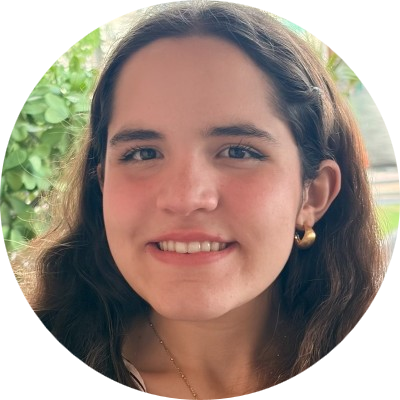
Sofia Segarra, Department of Justice’s U.S. Attorney’s Office for the District of Puerto Rico
"This summer, I returned to my home of Puerto Rico and interned with the U.S. Department of Justice’s U.S. Attorney’s Office for the District of Puerto Rico. As someone aspiring to study law to become an attorney and use the law to give back to my community, I entered the internship program wanting to better understand what public service looks like through the legal profession. Over the 8 weeks of my internship, I discovered that public service extends far beyond what happens inside a courtroom. Public service also shows up in the minutiae of attorneys’ everyday tasks, including researching and scouring hundreds of books to build an efficient argument or handling case-relevant evidence systematically and methodically.
I was primarily tasked with supporting litigation within the office’s Criminal Division, working alongside Assistant U.S. Attorneys, law clerks, law students, and other legal professionals. Throughout my internship, I contributed to more than 80 cases and supported various Assistant U.S. Attorneys by conducting legal research, providing translation services, completing case-preparation tasks, and managing evidence and data. Furthermore, many of my responsibilities included translating hundreds of Spanish- and English-language documents, including police reports, court materials, and written testimonies; researching important and relevant legal terminology using a variety of resources including LexisNexis and legal dictionaries for Spanish-to-English translation; extracting, uploading, and organizing information for the caseloads attorneys were tasked to manage; and completing time-sensitive assignments and tasks necessitated by ongoing proceedings. In addition, I processed more than 3,000 case files to support their archival preservation so legal professionals could easily access them in the future.
Some of the most valuable moments came from seeing how the work translated into practice. By attending numerous federal court proceedings, including hearings and sentencings, I saw how attorneys transformed extensive research, evidence, and preparation into effective legal advocacy. Moreover, I was exposed to the breadth of issues the U.S. Attorney's Office addresses daily, including violent crime, public corruption, financial fraud, organized crime, civil rights, and other challenges affecting the integrity and well-being of communities throughout Puerto Rico. These experiences taught me that effective government services depend on much more than a comprehensive understanding of the law. It requires precision, accountability, collaboration, open communication, and an awareness that at the core of the documents and evidence being handled are real people and real consequences. Even though an assignment may initially appear minuscule, it can become an important piece of a much larger effort to deliver and administer justice. Being afforded the opportunity to watch attorneys approach that responsibility with care broadened my understanding of what it means to serve the public and the community through legal and government oversight at the federal level.
One of the most meaningful parts of the internship did not take place within the office or even the courtroom. Through Project LEAD (Legal Enrichment and Decision-Making), I was part of a team of passionate legal professionals who helped implement educational workshops for Puerto Rican youth in resource-challenged communities, where students were introduced to the legal system, fiscal literacy, professional opportunities, and what it takes to make responsible decisions. On an individual basis, we were able to strengthen students’ knowledge of how laws function on the island or are applied to real-life situations, the roles attorneys, judges, and police enforcement officers play in society, and key findings pertaining to cases attorneys had managed from the various divisions that make up the U.S. Attorney’s Office. We also helped students develop skills in public speaking, budgeting, and self-advocacy. The students also got to speak with actual attorneys, judges, and police enforcement officers who shared invaluable advice and brief snapshots of their career trajectories. Project LEAD showed me the importance of giving communities the knowledge and resources they need to advocate for themselves before even entering a courtroom.
If I were to advise future students, I would recommend that they not be intimidated by opportunities that may initially seem beyond their reach; however, once they earn them, they should never wait for tasks or other opportunities for growth to come to them. Inevitably, there will always be quieter moments during an internship, but instead of disregarding them, use them. Ask whether someone in the office needs help, introduce yourself to colleagues, request brief conversations with others, or find tasks, no matter how simple they may be, that need to be done. In all honesty, some of the most valuable lessons of my summer came from pushing myself out of my comfort zone and asking questions.
Ultimately, my internship solidified my desire to become an attorney while also clarifying the kind of attorney I strive to become: one who views legal knowledge as a tool for public service, not merely a form of professional expertise. In conclusion, this internship provided me with a clearer understanding of the responsibility that comes with practicing law and strengthened my commitment to bringing that knowledge back to the communities I am hoping to serve on my island."
Itzel Solis, Fulfillment Fund
"This summer, I had the opportunity to serve as a Marketing Intern with Fulfillment Fund through CareerSpring’s FORWARD program. As a Fulfillment Fund Scholar myself, this internship was especially meaningful because I could give back to an organization that has supported me throughout my educational journey.
During my internship, I worked with the Fulfillment Fund marketing team to develop social media content to reach more Gen Z students, particularly high school and college students, first-generation students, and students from underserved communities. My main project focused on analyzing and improving Fulfillment Fund’s TikTok presence. My fellow intern and I reviewed previous TikTok analytics and identified ways to increase views, engagement, and awareness of Fulfillment Fund’s resources.
We created and filmed short-form videos, including a skit introducing the team, and developed content around topics such as internships, financial aid, college success, and student experiences. We experimented with trending sounds, relatable text, hashtags, and different posting times to determine what connected most with Fulfillment Fund’s audience. We also used tools such as CapCut, Canva, Hootsuite, Adobe, and TikTok Studio to create, schedule, and evaluate content.
One of the biggest lessons I learned was that social media marketing involves much more strategy than I originally realized. Even a ten-second video requires decisions about text placement, timing, audio, captions, audience, and whether the content reflects an organization’s mission. I also learned the importance of communication and collaboration. Working with the marketing team showed me that someone else can notice small details or offer ideas that make a piece of content much stronger.
Our work also allowed me to use data to make decisions. By comparing previous performance with the content we created, we found that short, relatable videos using trending audio and strategic posting times generated stronger engagement. Our content reached thousands of views and increased engagement, showing me how intentional communication can help a nonprofit reach the students who may benefit from its services.
Although I am a sociology major on a pre-law track, this experience strengthened skills that I know will be valuable in my future career. As someone who hopes to become a lawyer and eventually work in government, I understand that communicating effectively, understanding an audience, analyzing information, and advocating for an organization or community are important skills. This internship also expanded my understanding of public service and the role nonprofit organizations play in addressing public challenges. Government cannot address every issue alone. Organizations like Fulfillment Fund help bridge gaps in access to higher education by connecting students with resources, mentorship, and support.
This experience also changed how I think about the connection between different career fields. I initially chose a marketing internship because I wanted to develop skills that could complement my future legal career. I learned that skills such as communication, storytelling, teamwork, research, and understanding an audience are valuable across almost every profession.
My advice to future students is to go for opportunities even when they do not seem directly connected to your major or career path. You never know what skills, relationships, or perspectives you will gain. Every opportunity can contribute to your future in ways you may not expect."